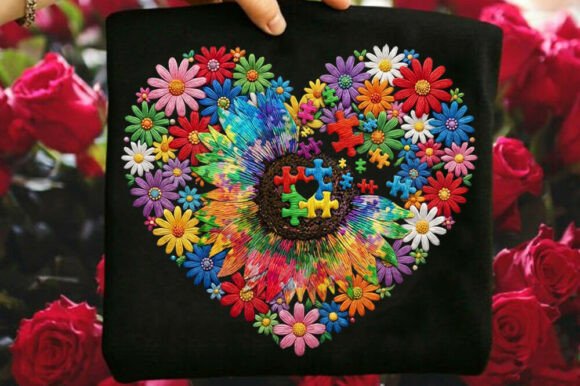
Autism Awareness Love Floral Shirt Png
As a designer who spends half my day staring at digitized files and the other half troubleshooting tension issues on an embroidery machine, I don’t just look at a design file; I look at how it will behave when pushed through a needle. When I first pulled up Autism Awareness Love Floral Shirt Png, my initial reaction was less about the colors and more about the structural integrity of the concept. It is listed under Illustrations and Graphics, which often implies a flat, static image, but for those of us in the handmade space, this PNG serves as the blueprint for a potential bestseller. The prompt asks if this asset can hold its own in a real-world commercial or personal project, and after running a mental simulation of stitching it out, here is my practical breakdown.
First Impressions: Mood and Visual Personality
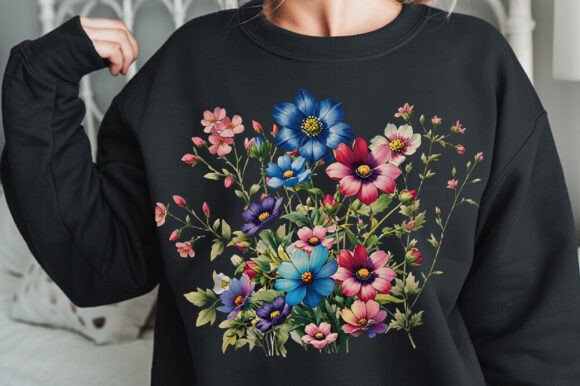
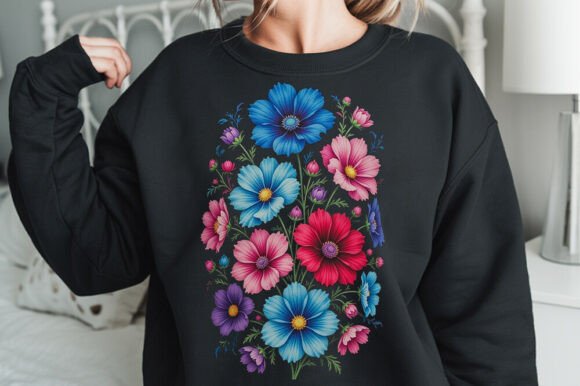
The moment you load the preview, the design communicates a specific emotional tone. Autism awareness themes can easily veer into clinical or overly busy territory, but this particular composition leans heavily into warmth. The integration of floral elements with the concept of love suggests a softness that translates well to textiles. In the world of embroidery, "softness" isn't just an aesthetic choice; it dictates stitch selection. A design like this naturally begs for satin stitches to define the outlines of the flowers and perhaps a gentle fill stitch for the background elements, rather than harsh geometric lines.
From a branding perspective, this embroidery project feels approachable. It doesn’t scream for attention; it invites it. This is crucial for items like baby clothes or nursery decor, where parents are looking for subtlety and sentimentality rather than bold, aggressive graphics. The layout appears balanced, which is the first hurdle cleared. Many digital assets fail because they are too wide for standard hoops or too tall for caps. If the aspect ratio holds up, we are already ahead of the curve.
Real-World Application: Where This Design Shines
Let’s talk about where Autism Awareness Love Floral Shirt Png would actually sell. I imagine this design thriving on custom apparel, particularly sweatshirts and heavyweight cotton t-shirts. The weight of the fabric provides the necessary stability for any fill areas, preventing the puckering that kills the quality of a finished product. Picture a boutique listing for a mother’s pride shirt. The floral motif adds a layer of elegance that makes the item feel premium, not just like another mass-produced graphic tee.
Beyond apparel, this design has serious potential in the home goods sector. Embroidered patches, tote bag designs, and kitchen towels are all viable markets. For a craft business owner, a set of matching aprons embroidered with this motif could be a strong holiday gift bundle. The versatility here is key. It works as a standalone center chest placement on a hoodie, or it could be scaled down (if the resolution allows) for a smaller pocket square or a delicate handkerchief.
I also see this fitting perfectly into the personalized gift market. Think of a pillow cover for a special needs sibling or a blanket for a child. The combination of love and floral imagery resonates deeply in these niches. As an Etsy seller, having a design that bridges the gap between awareness advocacy and general affection broadens your customer base significantly. It allows you to market to both the autism community and anyone looking for a heartfelt, nature-inspired decorative piece.
Technical Considerations and Stitching Challenges
However, a pretty PNG does not guarantee a clean stitch-out. We need to be realistic about the execution. The primary concern with any floral-based design is density. If the petals are tightly packed, you risk thread breaks and bulkiness, especially on thin fabrics. Before committing to a full production run, you must test the design on scrap fabric first. Pay close attention to the stitch density in the densest parts of the flower heads. If the underlying fabric shows through, the design will look cheap. Conversely, if there is too much buildup, the garment will feel stiff and uncomfortable against the skin.
Fabric texture plays a massive role here. On a smooth cotton twill, the details will pop. On a textured linen or a fuzzy fleece, small details might get lost. This is why I always recommend inspecting small details by viewing the design in black and white mockups. This strips away the color distraction and lets you see the actual shape and negative space. If the shapes become muddy without color, the design may struggle on complex fabrics.
Another critical factor is the hoop size. Ensure that the final stitched area fits comfortably within your standard hoops. If the design requires a large frame, it limits the types of garments you can embroider. You cannot easily hoop a finished sweatshirt sleeve or a curved surface like a cap without specialized attachments. If this design is intended for hats, verify that the curvature of the brim won’t distort the floral symmetry. Curved surfaces require careful stabilizer usage and possibly a different stitch angle to maintain clarity.
Color Contrast and Thread Selection
While the source file is a PNG, the final result depends entirely on your thread colors. High contrast is essential for readability. If you are embroidering on dark fabric, light threads are non-negotiable. However, even with good contrast, watch out for similar-colored threads sitting next to each other; the eye needs a clear boundary to distinguish one petal from another. Satin stitch edges must be crisp. If the underlay stitches are too aggressive, they can pucker the fabric, ruining the clean line of the flower outline. Always check whether the design works for both personal and commercial projects by verifying the licensing terms provided by the creator.
Strategic Advice for Sellers and Makers
If you are planning to use this as part of your design assets, consider the presentation. Since the input is a high-resolution 4500×5400 PNG, you have excellent flexibility for creating printable mockups. Show the design on different backgrounds to help buyers visualize it on their own products. A light pastel background emphasizes the floral delicacy, while a dark, moody background highlights the contrast and modern feel.
For those selling finished goods, emphasize the handmade aspect. Customers buying autism awareness merchandise are often looking for connection and authenticity. Describe the care taken in the stitching process. Mention the type of stabilizer used and the quality of the thread. This builds trust and justifies a higher price point. A simple embroidered patch with this design can be attached to a denim jacket, a backpack, or a laptop sleeve, extending the life of the garment and adding a permanent badge of support.
Be cautious with stretchy fabrics. If you plan to embroider this on athletic wear or maternity clothes, you need a flexible stabilizer and potentially a stretch-specific stitch pattern to prevent cracking during movement. Also, consider the end-user’s maintenance. Products that need frequent washing should be designed with durability in mind. Dense fills can trap moisture and take longer to dry, so advise customers on proper care instructions to preserve the integrity of the finished product.
Final Verdict
Autism Awareness Love Floral Shirt Png is a strong contender for designers looking to add sentimental, high-quality pieces to their inventory. It balances visual appeal with thematic relevance, making it suitable for a wide range of applications from sweatshirt embroidery to delicate baby embroidery. Its success, however, hinges on technical execution. Test rigorously, choose your materials wisely, and respect the limitations of the medium. When done correctly, this design has the potential to create meaningful connections with customers, turning a simple piece of cloth into a cherished keepsake. Just remember to confirm all licensing details before you start printing or stitching for sale, ensuring your craft business remains compliant and professional.